Kanthal, mesh and ceramic coils: what's the difference?
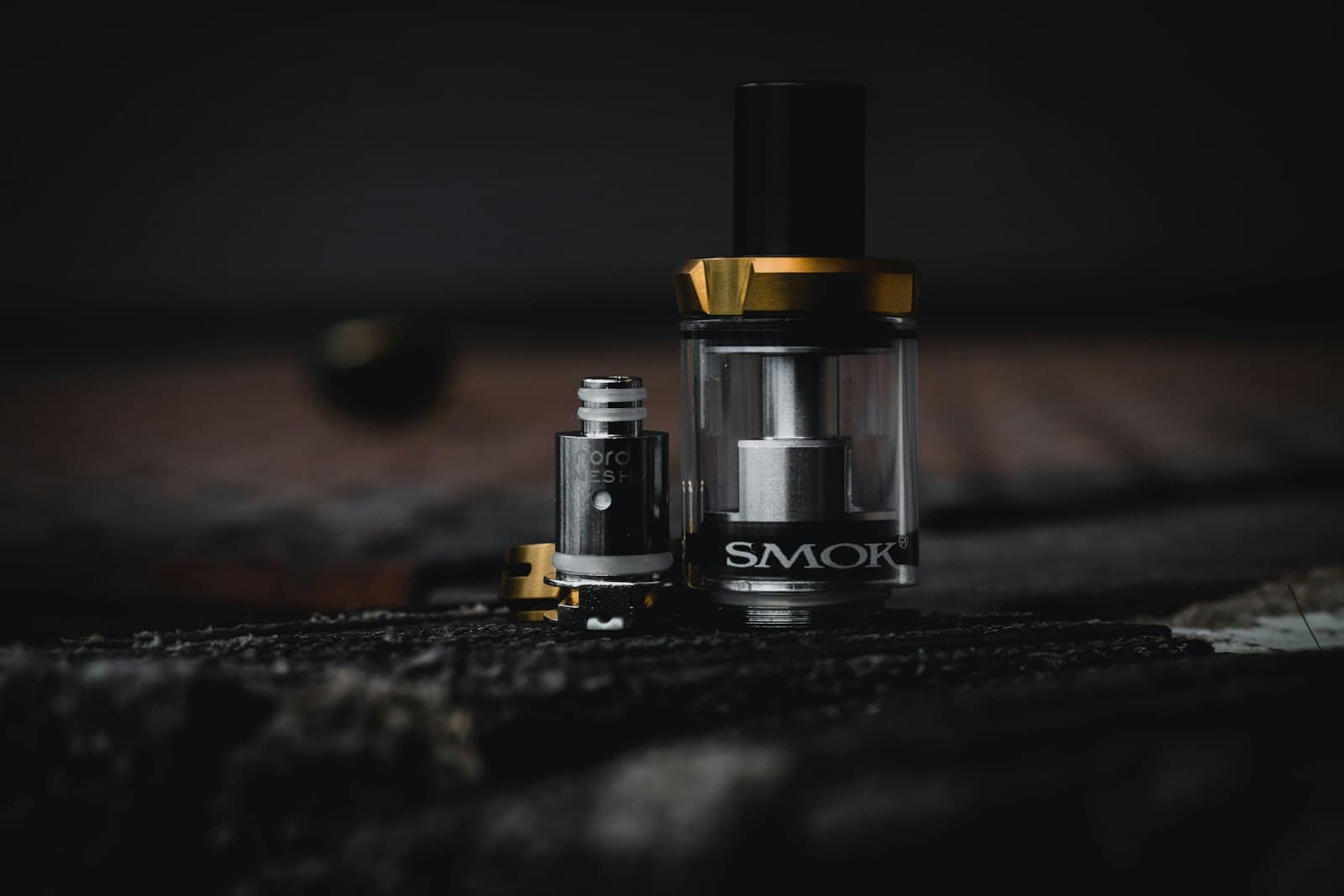
Open the box on a pack of replacement coils and, alongside the resistance value, you'll usually see a material or build type named on the packaging: Kanthal, mesh, or ceramic being the three you'll run into most often across UK pod kits and tanks. The resistance number tells you the power and draw style a coil is built for, covered in our guide to checking coil compatibility before you buy. The material tells you something different: how that coil is likely to behave day to day. Below is what each build is, and how manufacturers generally describe the way it affects flavour, vapour, ramp-up and lifespan.
Kanthal and other round-wire coils
Kanthal is an iron-chromium-aluminium alloy wire, wound into a tight coil shape and wrapped in wicking cotton. It's the longest-established coil build and still the most common in MTL pod coils and many restricted-DTL coils, largely because it's cheap to produce and behaves predictably. Manufacturers typically describe round-wire Kanthal builds as flavour-forward at lower wattage, with a moderate ramp-up (roughly a second or so from pressing the fire button to full vapour, according to typical manufacturer specs) rather than the near-instant response of mesh. Stated lifespan is usually similar to other builds at the same resistance, in the region of one to three weeks of regular use, though this varies by manufacturer and how the coil is used.
Mesh coils
Instead of a wound wire, a mesh coil uses a flat, perforated sheet of resistance metal wrapped around or laid across the wicking material. The larger, more even surface area is why manufacturers generally market mesh builds around faster ramp-up and higher vapour output than an equivalent-resistance round-wire coil, since more of the coil's surface contacts the wick at once. Mesh is now the standard build in most sub-ohm DTL tanks and in many higher-wattage pod systems. The trade-off manufacturers note is that mesh coils can dry out faster if paired with thinner, lower-VG e-liquid than they're designed for, since the larger surface area draws liquid through more quickly; see our guide to coil resistance and e-liquid ratio for how VG/PG ratio needs to match the coil you're using.
Ceramic coils
Ceramic builds use a heating element embedded in, or coated with, a ceramic material rather than leaving the resistance wire fully exposed to the wick. They're common in some MTL pod cartridges, particularly closed, pre-filled pod systems, where the coil is sealed inside the pod itself. Manufacturers commonly state that ceramic disperses heat more evenly across the wicking material, which they associate with a smoother draw and reduced risk of a burnt taste from hot spots, along with a longer stated lifespan under sweetened or higher-VG e-liquids that tend to gunk exposed wire faster. Ramp-up on ceramic builds is typically described as gentler and slightly slower than mesh, in keeping with the lower-wattage MTL setups they're usually paired with.
Comparison table
| Build | Usual draw style | Ramp-up | Vapour output | Manufacturer-stated lifespan |
|---|---|---|---|---|
| Kanthal / round-wire | MTL, restricted DTL | Moderate | Standard | 1–3 weeks regular use |
| Mesh | Open DTL, higher-power MTL | Fast | Higher | 1–3 weeks regular use |
| Ceramic | MTL, closed pod systems | Gentler / gradual | Standard, smoother | Often stated as longer under sweetened liquid |
These are general characteristics as described by coil and device manufacturers, not figures Coil & Cloud has independently lab-tested, and individual products vary. Two mesh coils from different brands at the same resistance won't necessarily perform identically, and how you vape, chain-vaping versus occasional use, and which e-liquid you run through it, has as much effect on real-world lifespan as the build material itself.
Does the material affect anything beyond taste and vapour?
Coil material is a performance and longevity question rather than a safety classification. All e-liquid and vaping devices sold in the UK have to meet requirements under the Tobacco and Related Products Regulations (TRPR), which cover emissions, labelling and notification to the MHRA, regardless of which coil material a device uses. If you're trying to work out which material your own device takes, our coil reference breaks coils down by resistance family, and the coil packaging or your device's product listing will confirm the exact build. If your device is a sealed pod system where the coil is built in rather than separately replaceable, it's also worth reading our guide to replacing your coil versus replacing the whole pod before you go looking for a coil that isn't sold separately.
Quick FAQ
Is a mesh coil always better than a round-wire Kanthal coil?
Not necessarily. Mesh generally produces more vapour and a faster ramp-up, which suits DTL vaping, but a lot of MTL users prefer the tighter, more flavour-forward hit that a traditional round-wire coil gives at lower wattage. Which is "better" depends on the draw style you're after, not just the material.
Do ceramic coils really last longer?
Manufacturers commonly state that ceramic elements resist gunking and hold up to sweetened or high-VG e-liquid better than exposed wire, which can translate into a longer usable life. This is a manufacturer-stated general characteristic rather than something independently lab-tested, and heavy chain vaping or a poor VG/PG match will shorten any coil's life regardless of material.
Can I tell which material my coil uses just by looking at it?
Sometimes. A flat perforated strip visible through a clear tank is mesh; a tightly wound wire coil is Kanthal or a similar wire alloy; ceramic elements are usually hidden inside a pod and not visible at all. The coil packaging or the device's product page is the more reliable source, since appearance alone can be misleading on sealed pod coils.